
Your company is sending emails.
You are posting on social media, updating the website, publishing content, and possibly running digital ads.
There is plenty of marketing activity. But is that activity creating meaningful business growth?
Many companies are doing more marketing than ever while continuing to struggle with inconsistent leads, slow sales, and unclear results. The problem is not always a lack of effort or investment.
Often, the individual pieces are not working together.
An effective marketing strategy for business growth connects your audience, messaging, website, campaigns, technology, and sales follow-up. Each part has a defined purpose, and every channel helps move prospective customers closer to a business conversation.
Here are seven warning signs that your marketing may be staying busy without building sustainable growth.
1. You Cannot Clearly Define Your Ideal Customer
One of the fastest ways to waste a marketing budget is to attempt to reach everyone.
If your audience is too broad, your message will usually become broad as well. You may talk about quality, service, experience, or value without explaining why a particular customer should choose your company.
An effective marketing strategy begins with a clear understanding of the people and organizations you want to reach.
Ask:
- Which customers are the most profitable?
- Which industries have the greatest need for our services?
- What size companies are the best fit?
- Who is involved in the buying decision?
- What problems cause those buyers to begin looking for help?
- What concerns could prevent them from taking action?
You may serve several types of customers, but that does not mean every campaign should speak to all of them at once.
The more precisely you define your audience, the more relevant your message can become. Relevance helps attract stronger prospects, improve conversion rates, and create better sales opportunities.
2. Your Marketing Channels Operate Independently
Your website, email campaigns, social media, advertising, content, and sales team should not function as unrelated activities.
They should support one another.
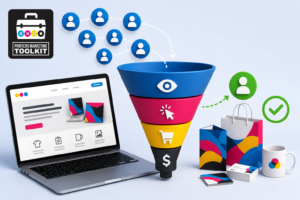
For example, an educational article can become the foundation for an email campaign. That email can lead readers to a landing page. Social posts can reinforce the same message. Paid advertising can introduce the offer to a new audience. Marketing automation can continue the conversation, and the sales team can follow up with engaged prospects.
That is a connected marketing system.
When the channels are disconnected, the customer experience becomes inconsistent. An advertisement may promise one thing while the landing page discusses something else. An email may generate interest without providing a clear next step. A prospect may complete a form but never receive timely follow-up.
A marketing strategy for business growth should define how people move from initial awareness to inquiry, conversation, and purchase.
3. Your Message Changes From One Campaign to the Next
Businesses often change their marketing message because they are searching for something that produces an immediate response.
One month, the company promotes low prices. The next month, it emphasizes quality. Then it focuses on speed, innovation, customer service, or a completely different offer.
Campaigns can address different subjects, but they should still support a consistent market position.
Prospective customers need to understand:
- What your company does
- Who you help
- Which problems you solve
- What makes your approach different
- Why they should trust you
That understanding is built through repetition.
If your central message changes constantly, prospective customers may encounter your company several times without developing a clear idea of what it represents.
Consistency does not mean publishing the same content repeatedly. It means reinforcing the same core value from different angles.
4. Website Traffic Is Growing, but Leads Are Not
More website traffic can be encouraging, but traffic alone does not create revenue.
If more people are visiting your website without contacting your business, downloading resources, requesting information, or taking another meaningful action, the site may not be doing enough to convert interest into opportunity.
Review the experience from a visitor’s perspective.
Can visitors quickly determine what your company offers? Do your service pages explain outcomes rather than simply listing capabilities? Is there a clear call to action? Are forms easy to complete? Does the website establish trust through testimonials, case studies, credentials, or examples?
Every important page should help visitors answer three questions:
- Is this relevant to me?
- Can this company solve my problem?
- What should I do next?
Conversion improvements do not always require a complete redesign. A stronger headline, clearer value proposition, shorter form, more specific call to action, or better proof can make a significant difference.
5. Leads Are Not Receiving Consistent Follow-Up
Marketing can generate attention and inquiries, but those opportunities still require follow-up.
Unfortunately, many leads are contacted once and then forgotten. Others remain in a database without receiving any meaningful communication.
This happens because the company lacks a defined process.
A prospect who is not ready to buy today may still become a valuable customer later. That person may need more information, internal approval, a budget, or the right business opportunity before moving forward.
Consistent follow-up helps your company remain visible during that process.
A lead-nurturing system might include:
- A prompt response to the initial inquiry
- Helpful educational emails
- Relevant articles or case studies
- Invitations to demonstrations or consultations
- Periodic personal outreach
- Notifications when a prospect becomes engaged again
Automation can support this process, but it should not make the communication feel impersonal. The goal is to deliver useful information while creating opportunities for genuine conversation.
A successful marketing strategy for business growth does not end when someone submits a form. That is where the next stage begins.
6. You Measure Activity Instead of Business Results
Marketing platforms provide an enormous amount of data. That does not mean every number deserves equal attention.
Likes, impressions, clicks, followers, and page views can help evaluate engagement, but they do not necessarily reveal whether marketing is contributing to growth.
Businesses should connect marketing measurements to business outcomes whenever possible.
Important metrics may include:
- Qualified leads
- Cost per lead
- Conversion rate
- Sales appointments
- Quote or proposal requests
- Customer acquisition cost
- Lead-to-customer conversion rate
- Pipeline value
- Revenue by source
- Customer lifetime value
- Marketing return on investment
The right measurements depend on the purpose of the campaign and the length of the sales cycle.
A campaign may not produce immediate revenue, but it should create evidence of progress. That could include stronger engagement from the right audience, increased inquiries, more sales conversations, or additional opportunities entering the pipeline.
If your reporting concentrates only on activity, you may continue investing in tactics that look productive without contributing meaningfully to the business.
For a deeper look at measurement, read How to Increase ROI With Digital Marketing Campaigns
7. Marketing Stops Whenever Business Gets Busy
This is one of the most common patterns I have seen throughout my career.
Sales slow down, so the company starts marketing.
The team sends emails, becomes active on social media, improves the website, and launches advertising. New work begins to arrive, production becomes busy, and marketing gradually stops.
Several months later, the pipeline slows down again.
Marketing works through visibility, familiarity, and trust. Those qualities require consistent communication over time.
The prospects seeing your message today may not need your services today. They may have a need three, six, or nine months from now. If your company disappears during that period, another business may earn their attention.
Marketing should not be an emergency response to slow sales. It should be a regular business function that supports the future pipeline.
How to Turn Marketing Activity Into a Growth System
A connected growth system does not require your company to use every available marketing channel.
It requires the right channels to work together toward clearly defined objectives.
Begin by establishing:
A specific audience
Identify the industries, organizations, and decision-makers you are best positioned to serve.
A clear value proposition
Explain the problems you solve, the outcomes you help create, and why your approach matters.
A focused offer
Give prospective customers a specific reason to respond. This could be a consultation, demonstration, assessment, guide, quote, or another valuable next step.
A conversion path
Determine where each campaign will send interested prospects and what you want them to do when they arrive.
A follow-up process
Decide who will respond, how quickly they will respond, and how the company will continue nurturing prospects who are not ready to buy.
Meaningful measurements
Track whether your marketing is creating qualified interest, sales activity, pipeline growth, and revenue.
A commitment to consistency
Establish a realistic marketing schedule and budget that the company can maintain even when other priorities compete for attention.
These elements transform separate marketing tasks into a marketing strategy for business growth.
My Perspective
Over the years, I have seen companies work extremely hard at marketing without creating the results they expected.
The problem was rarely a complete lack of ideas.
They had ideas, tools, channels, and campaigns. What they lacked was a system connecting those resources to clear business objectives.
More activity is not always the answer.
Sometimes the answer is better alignment.
Your message should support your market position. Your content should address the questions customers are asking. Your campaigns should lead to a clear next step. Your technology should help organize and nurture opportunities. Your sales team should know when and how to follow up.
When those pieces work together, marketing becomes easier to evaluate and improve. It also becomes more valuable to the business.
Build Marketing Around the Growth You Want
If your company is publishing more content, running more campaigns, and generating more activity without seeing consistent growth, take a step back.
Look at the entire customer journey.
Determine how prospects discover your company, what they learn, where they go next, how their information is captured, and what happens after they respond.
The objective is not simply to do more marketing.
It is to build a marketing strategy for business growth that attracts the right people, creates better opportunities, and helps your company turn attention into profitable customer relationships.
If your marketing feels busy but disconnected, contact me to discuss where the gaps may be and how a clearer growth strategy could help or visit our website to learn more and to sign up for a free analysis.
Frequently Asked Questions
What is a marketing strategy for business growth?
A marketing strategy for business growth is a coordinated plan for reaching ideal customers, communicating value, generating leads, supporting sales, and measuring results. It connects marketing channels and campaigns to defined business objectives.
Why does marketing activity not always produce growth?
Marketing activity may fail to produce growth when the audience is too broad, the message is unclear, campaigns operate independently, landing pages do not convert, or leads receive insufficient follow-up.
How can I tell whether my marketing strategy is working?
Track qualified leads, conversion rates, sales conversations, proposals, customer acquisition costs, pipeline value, and revenue. Engagement metrics can provide useful context, but they should not be the only measures of success.
How long does a marketing strategy take to produce results?
The timeline depends on the industry, sales cycle, offer, audience, and marketing channels. Paid campaigns may generate responses quickly, while SEO, content, brand visibility, and lead nurturing usually require sustained effort.
Should marketing and sales use the same strategy?
Marketing and sales have different responsibilities, but they should share the same audience priorities, value proposition, lead criteria, and growth objectives. Strong alignment helps prevent promising opportunities from being lost between the two functions.
Can marketing automation improve business growth?
Marketing automation can improve response times, lead nurturing, customer communication, and internal efficiency. It is most effective when it supports a clear strategy and relevant communication rather than replacing personal interaction.